
 By
Gutter Cleaning Melbourne is more than a seasonal chore; it is one of the simplest ways to manage rainwater around your property. Leaves, bark, seed pods and roof grit can collect in gutters and downpipes. When water cannot drain, it may spill over the edge, soak eaves and walls, and lead to avoidable repairs. A quick, regular check helps you spot trouble before the next downpour.
Leafy homes can collect bark and seed pods year-round, while commercial buildings may have long, hard-to-inspect box gutters. These seven tips help you plan maintenance for your property.
1. Look for the early signs of a blockage
The clearest warning is water spilling over the gutter during rain. You might also see weeds growing along the gutter line, dark water marks beneath the eaves, damp patches on walls, or gutters pulling away from the fascia. A downpipe that gurgles, drains slowly or overflows at its base can point to a blockage lower in the system.
Check the whole building during or after rain. Sagging gutters, corrosion, loose brackets or persistent leaks warrant an inspection because they may need more than a routine clean.
2. Schedule cleaning around Melbourne’s seasons
Twice a year is a useful starting point for many properties: once in autumn, after leaves have fallen, and again in spring, before the hotter and drier part of the year. It is a guide, not a fixed rule. Your roof, nearby trees, gutter design and local exposure all affect how quickly debris builds up.
Homes under mature trees may need more frequent checks. Gum trees can drop leaves, bark and gumnuts outside the usual autumn period, while low-pitched roofs tend to hold debris for longer. After a major storm or strong winds, check for fallen branches and new blockages even if your next scheduled clean is months away.
3. Treat clear gutters as one part of bushfire preparation
Dry leaves and twigs in a gutter can provide fuel for embers. The Country Fire Authority (CFA) includes clearing gutters among its property-preparation steps. If your home is near bushland or vegetation, add gutter checks to your broader fire-season routine rather than leaving the job until a hot, windy day.
Clearing gutters does not make a property bushfire-proof. Follow current CFA advice, prepare a household bushfire plan, and manage other vegetation and fine fuels around the home. For official guidance, see CFA’s preparation advice and the Building and Plumbing Commission’s bushfire protection guidance.
4. Make sure the downpipes are checked too
A clean-looking gutter does not guarantee that water can escape. Leaves and grit often collect at the outlet, where the gutter connects to a downpipe. If that opening is blocked, water can sit in the gutter or overflow during heavy rain. A proper inspection should include the outlets, downpipes and visible discharge points, not just the open gutter channel.
If you collect rainwater, ask how debris will be handled and whether the system will be flushed or checked after cleaning. The right method depends on the roof, tank connection and access. Avoid pushing debris into a downpipe, where it can form a harder-to-reach blockage.
5. Understand what a professional clean should include
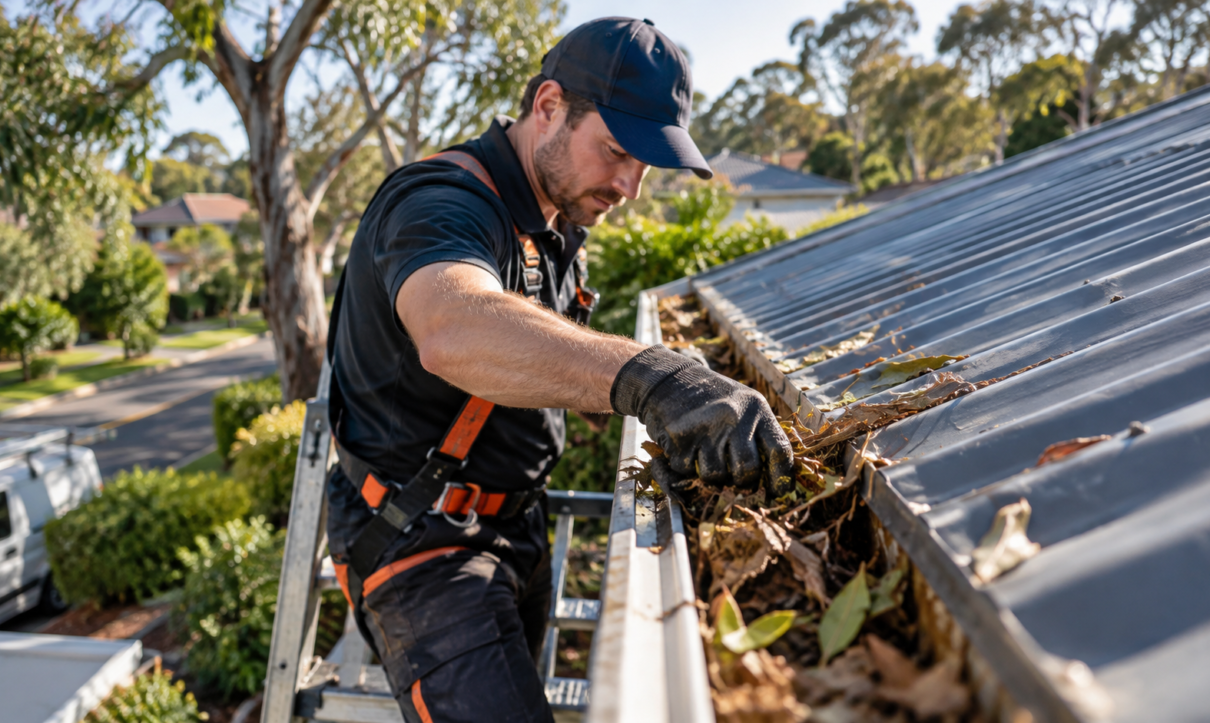
A thorough service normally starts with an inspection of the gutters, outlets and downpipes for debris and visible damage. The cleaner then removes leaves and silt by hand or with suitable vacuum equipment, depending on access and roof conditions. Where practical, the system is checked to confirm that water can drain, and any repair concerns are reported separately.
For taller buildings or awkward rooflines, a high-powered gutter vacuum with an extension pole may allow debris to be removed from a safer position. The available method varies by property, so ask what the quote covers, how the work area will be protected, and whether photos or a completion report are included. Ask for before-and-after photos to support future maintenance planning, and keep the report on file for reference. ShineUp provides gutter cleaning across Melbourne for homes and commercial sites.
6. Use gutter guards as a helpful extra, not a set-and-forget fix
Gutter guards can reduce the amount of larger debris entering a gutter, but they do not remove the need for checks. Fine leaves, seeds and roof grit may still collect on top or pass through, and a guard can make some blockages less visible. If guards are already installed, ask the cleaner to inspect the surface, outlets and downpipes as well as the accessible gutter sections.
Before installing guards, consider the debris around your home and choose a product suited to your roof and gutter. Guards can reduce leaf build-up, but regular inspection still matters.
7. Put safety ahead of a do-it-yourself clean
Cleaning a single-storey gutter from stable, safe access may be manageable for some homeowners. However, falls from ladders can cause serious injuries, and a ladder is not a safe choice for every job. Double-storey homes, steep or fragile roofs, uneven ground, overhead power lines, heavy debris and awkward access are all reasons to leave the work to a trained professional.
If you do any low-level maintenance yourself, use a suitable ladder on firm, level ground, keep three points of contact, and do not overreach or rest the ladder on the gutter. Stop if conditions are wet or windy. Read WorkSafe Victoria’s ladder safety guidance before deciding whether the task is within your ability. When in doubt, do not climb.
Older homes need extra care. Many Victorian homes built before 1990 may contain asbestos-containing materials, including in eaves or roofing. If you suspect asbestos, do not scrape, sand, brush or pressure-wash it. Leave the material undisturbed and get advice from a qualified asbestos professional. Start with Asbestos in Victoria.
Homes, commercial sites and body corporate properties
Offices, retail sites, warehouses and body corporate properties may have long gutter runs, internal box gutters or access restrictions. A small blockage can be harder to spot across a large roof, and water ingress may disrupt tenants or operations. A planned maintenance schedule—often twice a year or more frequently where trees and debris warrant it—helps property managers identify issues before they become urgent.
The right schedule depends on the site. Ask for a scope that lists the buildings and gutter areas to be checked, the frequency of visits, access and safety arrangements, debris removal, and how defects will be reported. ShineUp also works with body corporate properties and can coordinate related roof cleaning or pressure cleaning when required.
Choosing a gutter cleaner and understanding the quote
Compare what each service includes, not just the headline price. Ask whether the quote covers outlets, debris removal, a drainage check, photos and difficult-access fees. Confirm appropriate insurance, equipment and training. Recent reviews can help you judge communication and reliability.
The cost of Gutter Cleaning Melbourne services varies with the home’s size, number of storeys, gutter length, roof access, debris levels and whether downpipes are blocked. A clear quote should explain the assumptions behind the price and identify any work that falls outside a standard clean. If cleaning reveals damaged or altered guttering, ask a suitably registered or licensed roofing-stormwater plumber about repair requirements; the Building and Plumbing Commission explains the relevant work category in Victoria.
Frequently asked questions
How often should gutters be cleaned in Melbourne?
Twice a year is a sensible starting point for many homes: autumn and spring. Properties beneath mature trees, near bushland or exposed to frequent debris may need more regular checks. Inspect after major storms, too, and book a clean sooner if water overflows or downpipes drain slowly.
What does a professional gutter clean include?
A standard service should inspect the gutters and outlets, remove accumulated debris, check downpipes for visible blockages and report damage that needs repair. Flushing or a formal drainage test may depend on the property and service scope, so confirm those details before booking.
How much does gutter cleaning cost in Melbourne?
There is no single price for every property. The size and height of the building, ease of access, amount of debris, gutter design and blocked downpipes all affect the quote. Share clear property details and ask the provider to list what is included before work begins.
Do gutter guards mean I never need a clean?
No. Guards may reduce large leaf build-up, but fine debris can still collect and downpipes can still block. Keep inspecting the system and arrange maintenance when debris or overflow appears.
Is it safer to hire a professional?
For double-storey homes, steep roofs, fragile materials or difficult access, professional help is usually the safer choice. If you cannot reach the gutter from stable ground without climbing or leaning, do not attempt the clean yourself.
Keep gutters ready before the next downpour
Blocked gutters are easy to overlook until rain exposes the problem. Regular checks, clear downpipes and a cleaning schedule matched to your trees and roof can help reduce overflow and protect eaves, walls and outdoor areas. If you have seen water spilling over, stains beneath the roofline or gutters full of debris, arrange an inspection before the next storm.
For a quote, call ShineUp Exterior Cleaning on 0401 142 510 or request a free quote online. ShineUp services Melbourne homes, businesses and body corporate properties, including local areas such as Glen Waverley and Boronia.