 By
If the roof on your Melbourne home has turned patchy green or black, or there’s lichen crusting over the tiles that you can spot from the footpath, you’re probably weighing up roof cleaning Melbourne services and wondering what’s actually involved. This guide explains why local roofs grow what they grow, the signs it’s time to act, which cleaning method suits which roof material, what affects the cost, and the questions worth asking a roof cleaner before you hand over any money.
Not sure what your roof needs? Call Shine Up Exterior Cleaning on +61 401 142 510 or email info@shineupexteriorcleaning.com.au. Shine Up will talk through your roof type and the right approach for it.
Why Melbourne roofs get dirty faster than people expect
Melbourne gives roofs a long stretch of cool, damp, overcast weather through autumn and winter. Any roof face that sits in shade for most of the day, particularly south-facing pitches or sections under big gums, stays wet for longer after rain. That’s exactly the condition moss, lichen and algae need to get established.
Trees make it worse. Leaf litter from eucalypts and deciduous street trees collects in roof valleys and gutters, holds moisture against the surface and slowly breaks down into a thin layer of organic matter that growth can root into. Older suburbs with established gardens often see heavier build-up than newer estates for that reason.
Add general grime, bird droppings and the odd rusty fixing, and a roof that looked fine five years ago can end up looking tired well before the roofing material itself has worn out.
What’s actually growing on your roof?
Three things show up most often on Victorian homes, and they behave differently:
-
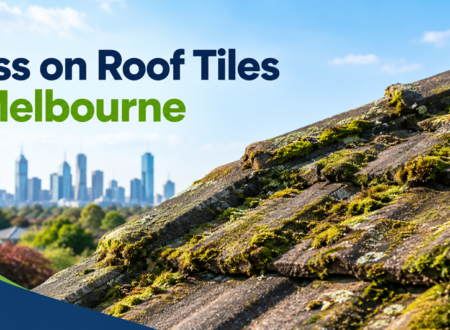
Moss – green and cushiony. It soaks up water like a sponge, roots into tile pores and mortar joints, and can lift or shift tiles as it thickens. It also dams water flow, so rain backs up under tile laps instead of running to the gutter.
-
Lichen – flat grey, white or yellowish discs that bond hard to the surface. Lichen is slow-growing, stubborn and a nuisance to remove. Left long enough, it etches into tile coatings.
-
Mould and algae – the black streaks and dark staining you see on shaded sections. Early on it’s mostly a cosmetic problem, but it’s a reliable sign the surface is staying damp.
None of these will wreck a roof overnight. Over several years, though, trapped moisture, blocked drainage and surface etching all shorten the life of tiles, coatings and pointing. Dealing with it before it gets thick is cheaper than dealing with it after.
Signs your roof needs cleaning
You can check most of these from the ground after the next rain:
-
Green moss along tile edges, in valleys or near gutters
-
Grey, white or yellow lichen patches
-
Black streaking or a dull, patchy colour, especially on shaded sections
-
Leaf litter sitting in valleys that doesn’t wash away
-
Gutters overflowing in heavy rain
-
A roof that looks noticeably darker than your neighbours’
-
Damp marks inside near the ceiling line (this one needs a proper look; cleaning alone may not be the answer)
If you tick two or three of these, it’s worth getting the roof looked at.
Roof cleaning Melbourne: matching the method to the roof
There’s no single correct way to clean a roof. The right approach depends on the material, how old and fragile it is, what’s growing on it, how steep it is and how safely it can be accessed. The main options are:
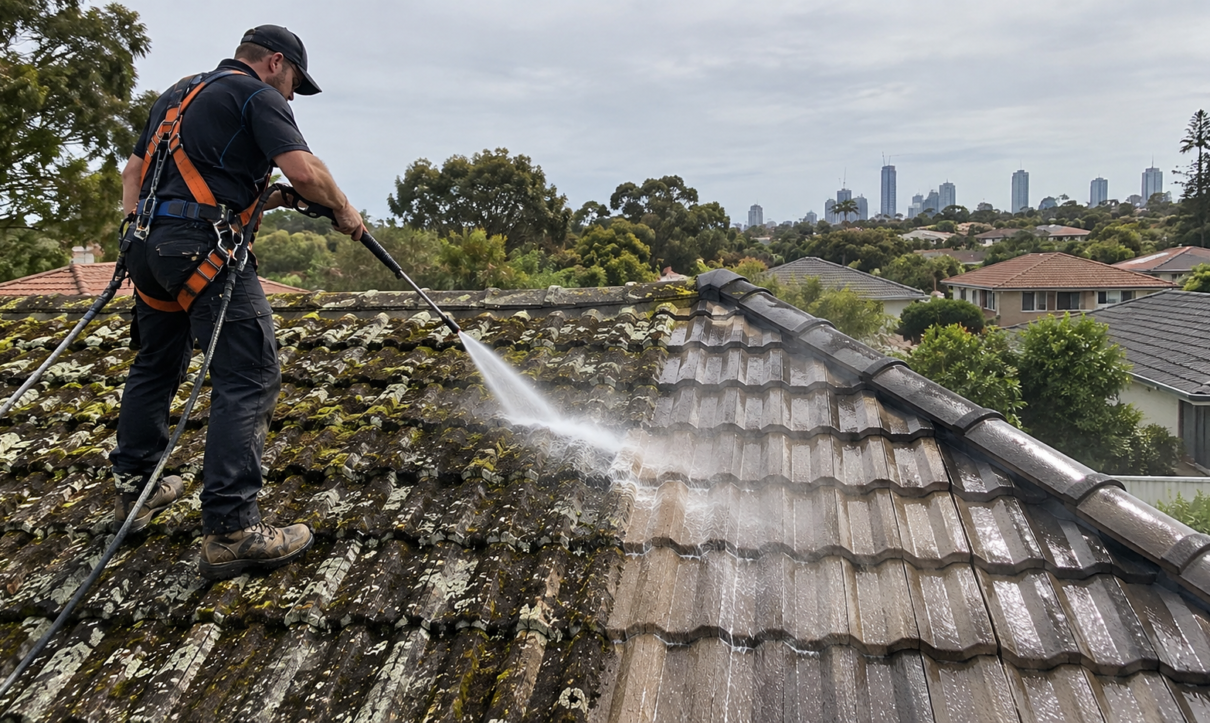
Soft washing (low-pressure chemical treatment). A cleaning solution is applied to kill moss, lichen and mould at the root. Growth dies off and either weathers away over the following weeks or is rinsed off at low pressure. This is the gentler option for older or brittle tiles, painted surfaces and polycarbonate.
Pressure cleaning. Water under pressure physically strips growth and grime. It gives an immediate visual result and suits sound concrete tiles and some metal roofing. In the wrong hands, though, high pressure can scour the coating off concrete tiles, blast mortar out of ridge pointing, drive water under laps and scratch or crack polycarbonate.
Manual removal. Scraping or brushing heavy moss by hand before treatment, and clearing gutters and valleys of debris. Often done in combination with one of the above.
How roof material changes the decision
-
Terracotta tiles – the glazed surface cleans up well, but older tiles can be brittle and ridge pointing is easily damaged by high pressure.
-
Concrete tiles – porous, with a surface coating that wears with age. Moss loves them. Pressure has to be kept in check so the coating isn’t stripped.
-
Colorbond and other metal roofing – generally straightforward with low pressure, but it dents if walked on carelessly and some harsh chemicals will corrode it.
-
Polycarbonate and fibreglass – scratch easily and crack under pressure. Soft washing is the sensible route.
-
Slate – a specialist material that needs specific handling. Ask any cleaner directly whether they take on slate before booking.
Shine Up Exterior Cleaning cleans metal and Colorbond, tiled, fibreglass and polycarbonate roofs, and offers both pressure cleaning and soft washing, so the method is chosen to suit the surface rather than the other way round. Property managers can also ask about commercial roof cleaning.
Send Shine Up a photo of your roof and a rough idea of its size, and you’ll get a straight answer on the best way to clean it. Call +61 401 142 510.
What affects roof cleaning cost in Melbourne?
Roof cleaning is normally quoted per job rather than at a flat rate, because the variables are big:
-
Roof size and pitch
-
Single or double storey
-
Material and condition
-
How heavy the growth is
-
Access around the property
-
Whether gutters and downpipes are added
A single-storey Colorbond roof with light grime is a very different job to a steep two-storey concrete-tile roof thick with moss. Get a written quote based on your actual roof rather than relying on a generic price you’ve seen online.
DIY roof cleaning: where it tends to go wrong
Plenty of handy Melbourne homeowners can clear leaves from a single-storey gutter with a ladder, a mate footing it and a dry day. Climbing onto a roof to clean it is a different proposition.
-
Height and footing. Wet moss on tiles or metal is extremely slippery, and a fall from a roof or ladder can cause serious injury.
-
Hire pressure washers. Many come with nozzles that are too aggressive for roofing. One pass at the wrong angle can strip a tile coating or push water under the laps.
-
Chemicals. Bleach-based mixes run straight into gutters, downpipes and rainwater tanks, and then into the garden. Tanks need disconnecting and plants need protecting, which is easy to overlook.
-
Access. Steep pitches, two-storey homes and roofs with skylights or solar panels need proper equipment and a plan for getting around safely.
None of this means DIY is always a bad idea. For a small, low, flat polycarbonate pergola, a gentle hose-down might be perfectly reasonable. For the main roof of the house, the risk and the equipment needed usually tip the balance toward hiring a roof cleaner.
What to ask a roof cleaning company before you book
A few direct questions sort the serious operators from the rest:
-
Which method will you use on my roof, and why that one?
-
Do you carry public liability insurance?
-
How do you manage safety when working at height?
-
Will you disconnect rainwater tanks and protect garden beds?
-
Are gutters and downpipes included, or quoted separately?
-
What won’t come off? Rust stains, cracked tiles and faded paint aren’t fixed by cleaning, and an honest cleaner will say so up front.
Get the answers in a written quote so there’s no confusion on the day.
Don’t skip the gutters
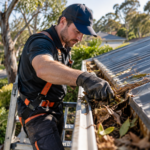
Cleaning the roof and leaving the gutters full of debris defeats the purpose. Everything washed off the roof ends up in the gutters, and if they’re blocked, water sits against the fascia and overflows back under the roofline. Shine Up can quote gutter cleaning and downpipe clearing in the same visit as a roof clean, which is the sensible way to do it.
The short version
Most people book roof cleaning in Melbourne because the roof looks tired, but the real value is in stopping moisture-holding growth before it damages tiles, pointing and drainage. Choose the method to suit the roof, be realistic about DIY on anything higher than a pergola, and ask the right questions before booking. A well-done clean with the gutters sorted at the same time is one of the simpler bits of property maintenance you can tick off.
FAQS
How often should a roof be cleaned in Melbourne?
There’s no fixed schedule. Many Melbourne roofs go a few years between cleans, while shaded roofs, roofs under large trees and older concrete-tile roofs tend to need attention sooner than sunny, exposed Colorbond roofs. Keep an eye out for moss, dark staining or overflowing gutters and act on those signs rather than a calendar.
Will roof cleaning stop moss coming back?
Not permanently. Cleaning removes what’s there, but the conditions that caused it (shade, moisture and nearby trees) are still there. Keeping gutters clear and trimming overhanging branches slows regrowth. Ask your cleaner what they recommend for your roof.
Can moss, mould and lichen damage a roof?
Yes, gradually. Moss holds water against the surface and can lift tiles as it thickens. Lichen bonds to tile coatings and etches them over time. Mould and algae are mostly cosmetic early on but indicate the surface stays damp. All three can block water flow and push moisture toward laps, pointing and gutters.
Is pressure cleaning safe for a tiled roof?
It can be, on sound concrete or terracotta tiles, when done at controlled pressure and the right angle by someone who knows the material. On older or brittle tiles, painted surfaces or polycarbonate, high pressure risks stripping coatings, cracking sheets or forcing water under the laps. A soft wash is often the safer choice for those roofs.
How much does roof cleaning cost in Melbourne?
It depends on roof size, material, pitch, how much growth is present, access and whether gutters are included. Get a written quote based on your specific roof so you’re comparing like for like.
Is professional roof cleaning better than DIY?
For the main roof of a house, usually yes. Professionals bring height-safety equipment, the correct pressure settings and treatments for your roof type, and know how to protect tanks and gardens. DIY makes sense for small, low, easily reached structures. The deciding factors are height, pitch, material and whether you have the right gear.
How long does professional roof cleaning take?
It depends on roof size, pitch, access and the method used, so ask for an estimate with your quote. Soft-wash treatments keep working for weeks afterwards as the dead growth weathers off, so the full visual result isn’t immediate. Pressure cleaning gives an instant result. Larger or commercial roofs may need more than one visit.
Ready to get your roof sorted? Shine Up Exterior Cleaning handles residential and commercial roof cleaning across Melbourne, with gutters quoted in the same visit if you want them done. Call +61 401 142 510 or email info@shineupexteriorcleaning.com.au for a quote.